
Dopamine… more than just the “happiness molecule”
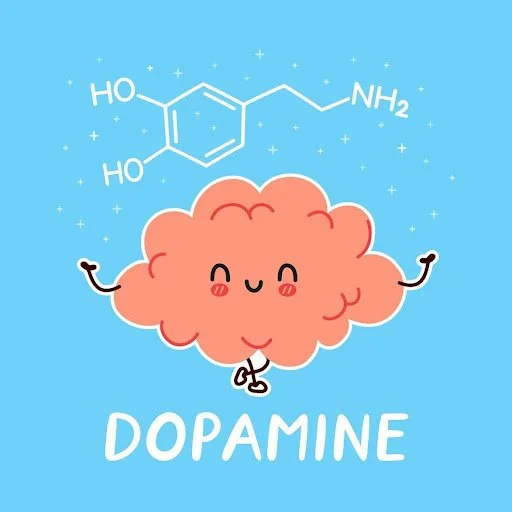
Here we see the chemical structure of the most popular brain molecule: Dopamine! This mere molecule doesn’t just make you “happy”, it holds all sorts of magic its mist… read more in this blog post! Image from: https://www.centeredrecoveryprograms.com/blog/dopamine-and-addiction/
When most people think of dopamine, they imagine the blissful burst of brain chemicals we feel when we eat the first bite of our favorite ice cream. Or they think of the term “dopamine hit” which we use to describe the rush we get from scrolling on social media… to online shopping… to getting an A on your test! Most of these definitions are mostly correct. Dopamine IS released in the brain when we interact with rewarding things around us that make us happy.
But dopamine is more than just the “happiness drug”- it is a molecule involved in several complex brain processes including movement, motivation, and learning. Dopamine circuitry, which refers to the network of connections made up of dopamine-releasing neurons, is spread throughout the brain like a spider web. This dopamine “web” has been the subject of research spanning from affective disorders like depression, to schizophrenia, and even to Parkinson’s disease.
Importantly, all these disorders involve the dysregulation of dopamine neurons and their circuitry. Current medications for these disorders act to re-regulate dopamine circuitry and strengthening the “dopamine web”. However, most current medications act BROADLY on dopamine systems, and they lack the specificity needed to address dysregulated networks within the widespread dopamine web. Without specific and targeted medications, many individuals with these disorders experience side effects that are undesirable.
My research as a neuropharmacologist aims to better understand the complexity within the brain’s dopamine circuitry to support improved pharmacological treatments for patients with these disorders. This starts with the evolving understanding that dopamine neurons are not homogeneous- they are quite varied and complex!
I specifically investigate genetic differences in dopamine neurons and how these genetic differences make up subpopulations of dopamine neurons. I then study how dopamine subpopulations guide different motivated behaviors. I am interested in motivated behaviors that are typically dysregulated in dopamine-related disorders, including anxiety, food intake, and reward seeking. I study these behaviors in mice… which can be as simple as teaching a mouse to press a lever for a sugar pellet – a yummy treat! – and then activating groups of dopamine neurons. From these studies, I can then determine how altering the activity of specific dopamine neurons changes motivation for reward.
From studying motivated behavior and dopamine subpopulations in mice, I aim to further our understanding of the complex dopamine circuitry dysregulated in affective disorders like depression. Through improving our basic knowledge of brain dopamine systems and behaviors, I can then recommend better targets for medications that treat affective disorders. Hopefully, this can make therapeutics more effective and minimize the side effects patients experience, so they can live happier, healthier lives.
Gretchen Stemmler is a first year pharmacology graduate student. She studies the neural systems involved in motivation and reward learning using techniques such as neuromodulation, fluorescence imaging, and pharmacological methods. Through examining neural circuitry during natural and maladaptive behavior, she aims to identify specific molecular and circuit level mechanisms to facilitate development of treatment for individuals with addiction and mood related disorders.