Superbaby Psuedoscience: Limitations of Embryo Screening
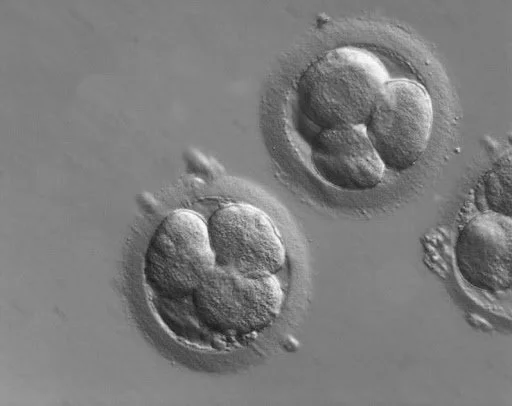
Photo by ZEISS Microscopy; Image source: link
Superbabies is not just a fever dream movie of the 2000s. There has been a recent initiative, backed by the ultra-wealthy in Silicon Valley, to develop embryo-screening start-ups to be able to screen for birth defects, neurodevelopmental disorders, and even hereditary cancer1. Some of this is already done in public health programs in the United States; every state has their own newborn screening program that screens all newborns for various congenital diseases2.
This new drive is different: firstly, it is an initiative to screen embryos, or an egg that has been fertilized outside of the uterus during in vitro fertilization. Secondly, this type of screening claims to predict if these embryos will develop a disease or condition as newborns or adults in the future.
Unfortunately, the ability to accurately predict if an embryo, newborn, or an adult will definitively develop a complex disease or condition in the future is still science fiction. The implementation of this type of embryo screening has been challenged, on both a scientific and ethical basis, by multiple groups of scientists and professional societies3. Companies claiming to be able to do so are missing one fundamental scientific principle, a mantra that all scientists live by: correlation does not equal causation4.
One such company, Orchid Health, uses computational analyses to predict what are known as polygenic risk scores (PRSs) to predict a “child’s genetic propensity for developing complex ailments later in life”1. Polygenic, “poly-” meaning many, and “-genic” meaning gene, is a term used to describe a condition that is shaped by the summative effect of differences in many genes. This is in contrast to a monogenic (mono- meaning one) condition, like Huntington’s disease, which is caused by an unexpected variation in only one gene, called Huntingtin5, and that we can reliably and confidently test for. Some of the polygenic conditions screened for by Orchid include “bipolar disorder, cancer, Alzheimer’s disease, obesity and schizophrenia.”2
PRSs are correlative tools; a high PRS for heart disease, for example, does not mean that you with 100% certainty are going to develop heart disease at some point in your lifetime. Many polygenic conditions arise due to a combination of two factors: genetics, and the environment one lives in6.
Even in adults, scientists are still working to understand how to predict risk of polygenic conditions, and are hindered on these two fronts. Firstly, biomedical databases, which are used to understand genetic association with disease, are critically lacking in diversity. Most of these studies have been performed on participants of European descent and have limited utility across populations of different genetic ancestries, which means that scientists are not as good at predicting polygenic disease risk for these understudied populations7. Secondly, there are various factors that contribute to one’s environment. On a broad level, these factors include air pollution, climate, and even socioeconomic status8,9. In the public health field, these are referred to as social determinants of health, and also include factors like access to healthcare, safe housing, or healthy food. Social determinants of health are well established as strong predictors of polygenic conditions such as cardiovascular disease10.
Ultimately, polygenic embryo testing is not backed by science. If we want to be able to predict polygenic disease risk, we need to better understand both how one’s genetics and environment, including the social context in which they live, contribute to their health. We need to put more attention towards studying social determinants of health, social support systems, and environmental regulations in order to improve the social conditions we live in today and to improve the health of populations of the future.
Citations
Tiku, N. & De Vynck, G. 2025 July 16. The startup that wants to score your embryos for disease risk. The Washington Post. https://www.washingtonpost.com/technology/2025/07/16/orchid-polygenic-screening-embryos-fertility
National Academies of Sciences, Engineering, and Medicine; Health and Medicine Division; Board on Health Sciences Policy; Board on Children, Youth, and Families; Committee on Newborn Screening: Current Landscape and Future Directions; Bowman K, Dawson EP, Mullen J, editors. Newborn Screening in the United States: A Vision for Sustaining and Advancing Excellence. Washington (DC): National Academies Press (US); 2025 Aug 13. Available from: https://www.ncbi.nlm.nih.gov/books/NBK618103/ doi: 10.17226/29102
Grebe TA, Khushf G, Greally JM, Turley P, Foyouzi N, Rabin-Havt S, Berkman BE, Pope K, Vatta M, Kaur S; ACMG Social, Ethical, and Legal Issues Committee. Clinical utility of polygenic risk scores for embryo selection: A points to consider statement of the American College of Medical Genetics and Genomics (ACMG). Genet Med. 2024 Apr;26(4):101052. doi: 10.1016/j.gim.2023.101052. Epub 2024 Feb 23. PMID: 38393332.
Chapman CR. Ethical, legal, and social implications of genetic risk prediction for multifactorial disease: a narrative review identifying concerns about interpretation and use of polygenic scores. J Community Genet. 2023 Oct;14(5):441-452. doi: 10.1007/s12687-022-00625-9. Epub 2022 Dec 19. PMID: 36529843; PMCID: PMC10576696.
Broad Institute Communications. 2025 January 16. New Understanding of How Genetic Mutation Causes Huntington’s Disease. Harvard Medical School. https://hms.harvard.edu/news/new-understanding-how-genetic-mutation-causes-huntingtons-disease
Virolainen SJ, VonHandorf A, Viel KCMF, Weirauch MT, Kottyan LC. Gene-environment interactions and their impact on human health. Genes Immun. 2023 Feb;24(1):1-11. doi: 10.1038/s41435-022-00192-6. Epub 2022 Dec 30. PMID: 36585519; PMCID: PMC9801363.
Sirugo G, Williams SM, Tishkoff SA. The Missing Diversity in Human Genetic Studies. Cell. 2019 Mar 21;177(1):26-31. doi: 10.1016/j.cell.2019.02.048. Erratum in: Cell. 2019 May 2;177(4):1080. doi: 10.1016/j.cell.2019.04.032. PMID: 30901543; PMCID: PMC7380073.
McGuire D, Markus H, Yang L, Xu J, Montgomery A, Berg A, Li Q, Carrel L, Liu DJ, Jiang B. Dissecting heritability, environmental risk, and air pollution causal effects using > 50 million individuals in MarketScan. Nat Commun. 2024 Jun 25;15(1):5357. doi: 10.1038/s41467-024-49566-6. PMID: 38918381; PMCID: PMC11199552.
Kosciuszko M, Steptoe A, Ajnakina O. Genetic propensity, socioeconomic status, and trajectories of depression over a course of 14 years in older adults. Transl Psychiatry. 2023 Feb 23;13(1):68. doi: 10.1038/s41398-023-02367-9. PMID: 36823133; PMCID: PMC9950051.
Havranek EP, Mujahid MS, Barr DA, Blair IV, Cohen MS, Cruz-Flores S, Davey-Smith G, Dennison-Himmelfarb CR, Lauer MS, Lockwood DW, Rosal M, Yancy CW; American Heart Association Council on Quality of Care and Outcomes Research, Council on Epidemiology and Prevention, Council on Cardiovascular and Stroke Nursing, Council on Lifestyle and Cardiometabolic Health, and Stroke Council. Social Determinants of Risk and Outcomes for Cardiovascular Disease: A Scientific Statement From the American Heart Association. Circulation. 2015 Sep 1;132(9):873-98. doi: 10.1161/CIR.0000000000000228. Epub 2015 Aug 3. PMID: 26240271.
Deja Monet is a Ph.D. candidate in the Graduate Program in Neuroscience at the University of Washington. In addition to researching brain development, she also applies her training in science, technology, and society studies to exploring public health and science accessibility