
The Value in Struggle
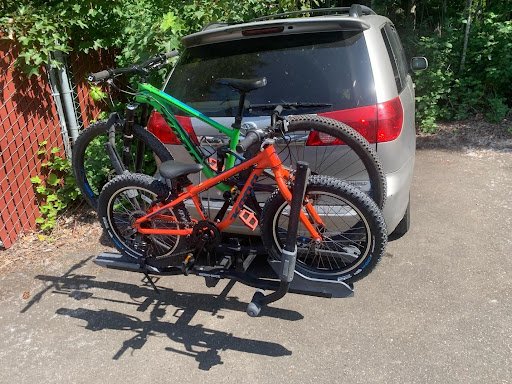
I am a cyclist, a mother, and a neuroscientist. Biking has played a pivotal role in my life. I met my wife racing bicycles. Now I study how your brain learns new movements and skills (like biking!). Suffice to say, as soon as my eldest began toddling around I started investigating how to teach kids to bike.
Naturally, I turned to the neuroscience literature. The core question boils down to what do you start them on? A two wheeled balance bike without pedals or a bike with pedals and training wheels.
I, like many in my generation, learned to bike with training wheels. It seems a natural starting place, the training wheels keep the kid upright and get them biking straight away! Balance bikes, on the other hand, have a much steeper learning curve. It can take days to weeks for a kid to figure out just how to hold the bike up without tumbling over. As a parent it is tempting to choose the easier option for less crying and fewer skinned knees. But sometimes the key to learning is in the struggle.
While balance bikes may be more challenging initially, the research suggests that that initial struggle is valuable in the long term (1). While it’s true kids might get started faster with training wheels, the actual goal is not that they can bike with training wheels. The goal is to be able to bike independently without aid. When researchers looked at kids who started with balance bikes vs training wheels, they found that the balance bike group attained independent pedal biking on average almost a year and a half earlier than the training wheels group. More interesting is they had a group that used both styles of bike, and their learning matched the slower training wheels group. What’s happening here? The training wheels, while trying to be helpful, have removed some of the skills core to riding a bicycle like holding it up or leaning into a corner. It's easier when you don’t have to do these things, but taking them away may slow their overall learning.
We see this pattern throughout neuroscience and psychology. Advanced hand and arm prosthetics now have built in sensors to detect muscle activity in the user’s residual limb. This activity can be used to predict what the user is trying to do with the missing hand and control the prosthetic to open and close. The current approach is to building these predictions has been to try and make them as intuitive and easy as possible for the user. Despite users starting to use the prosthetics within a day, these devices have a surprisingly low retention rate (2). Recent research compared these easier, intuitive controllers and controllers purposefully built to be hard. While the users with the hard controller took longer to learn how to use the prosthetic, that struggle came with benefits to their ability to generalize and retain their learning. While there are multiple ways these prosthetics need to be improved, this research suggests that some difficulty during initial learning may prove important.
When it came to my kids, I chose the balance bike and the extra scraped knees. It’s paid off for me. My eldest joined me on at the pump track on her geared mountain bike on her 4th birthday. To be clear, making learning easier is not always bad and there are many barriers or challenges to learning that should be removed. But next time you consider taking the easy way, using technology to remove some of the challenge in your life, you might be losing more than you bargained for.
Citations
Blommenstein B, van der Kamp J. Mastering balance: The use of balance bicycles promotes the development of independent cycling. Br J Dev Psychol. (2022)
Schone, H.R., Udeozor, M., Moninghoff, M. et al.Biomimetic versus arbitrary motor control strategies for bionic hand skill learning. Nat Human Behavior (2024).
AJ Mallory is a Bioengineering Graduate Student at the University of Washington studying Neural Engineering in the Orsborn lab. She is particularly interested in the neural dynamics underlying motor learning and brain computer interfaces. When not in the lab she enjoys reading comic books with her kids and taking her dogs for long walks in the rain.