
The Bravest Decision Is Choosing Not to Act
Three weeks after her kidney transplant, Maria came to clinic smiling. Her new kidney was working. Her labs were beautiful. For the first time in years, she was planning a future that did not revolve around dialysis.
Then her routine urine test came back positive for bacteria.
She felt completely fine. No fever, no pain, no burning, no symptoms at all.
The decision in front of us was simple and heavy at the same time. Do we treat?
In transplant medicine, infection is one of our greatest fears. Patients take medications that quiet their immune systems so their bodies will accept a new organ. That protection against rejection also makes it harder to fight off microbes. When a lab result turns positive, every instinct says: act quickly, prescribe, prevent, do not take chances.
Yet an important question is worth noting: are we always helping patients when we treat these findings, or could we sometimes cause harm to patients and to the effectiveness of antibiotics themselves?
Antibiotics are among the greatest achievements in modern medicine. Without them, organ transplantation would not exist as we know it today; they prevent common infections from progressing to severe illnesses.
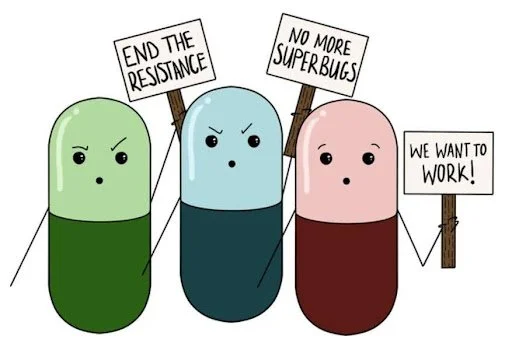
Antibiotics save lives every day. But every time we use an antibiotic, we kill the most vulnerable bacteria and leave behind the hardest ones. Those survivors multiply. Over time, this creates antibiotic resistance, making infections harder and sometimes impossible to treat.
Not every positive test, however, means infection. In Maria’s case, bacteria were present but were not causing harm. This is called asymptomatic bacteriuria, a long phrase that simply means bacteria in the urine without symptoms. It is surprisingly common, occurring in up to 20–50% of kidney transplant recipients at some point after transplant.
For years, the reflex has been to treat these findings “just in case.” Bacteria equal danger. But bacteria do not always equal disease, and unnecessary treatment can drive resistance. If a true infection develops later, our options may be fewer, stronger, more toxic, and more expensive. In trying to prevent a problem, we may create a more dangerous one.
My research focuses on this uncomfortable gray area. I study when antibiotics genuinely protect transplant patients and when restraint may be safer. I also examine how often we test patients who feel well, because frequent testing can uncover abnormalities that do not represent real illness.
This work contributes to antimicrobial stewardship, the practice of using antibiotics thoughtfully and only when they clearly help. Stewardship is about preserving the power of these medications, so they remain effective for the patients who truly need them.
It also includes diagnostic stewardship, being deliberate about when and why we order tests in the first place. Because once a test is sent, it often demands a response.
For Maria, we chose careful monitoring instead of immediate antibiotics. She remained symptom-free. Her kidney continued to function beautifully. We avoided exposing her to medication she did not need.
Transplant medicine is often defined by dramatic breakthroughs and complex surgeries. Yet some of its most important advances are quieter. They happen in exam rooms, in conversations about risk, in moments when we pause instead of reacting.
Transplant recipients have already survived enough. Protecting their second chance at life means more than fighting every microbe we see.
Sometimes doing everything is not the same as doing what is right. Sometimes protecting a new organ begins with the courage to hold back.
Ralph Tayyar is a Clinical Assistant Professor in the Division of Allergy & Infectious Diseases at the University of Washington Medical Center. He specializes in transplant infectious diseases and antimicrobial stewardship, with a focus on improving outcomes for immunocompromised patients. His research examines how antibiotic practices influence transplant rejection, infection risk, and antimicrobial resistance.