Victoria Rachleff is a Molecular & Cellular Biology Ph.D. student at the University of Washington. Melding her background in neuroscience and interest in virology, Rachleff uses clinical data and animal models to study viruses that infect the nervous system.
Read More
Shervin Sahba is a Physics Ph.D. student at the University of Washington. Shervin studies how to control the flow of light by forecasting its future state, merging methods from computational physics, photonics, and machine learning.
Read More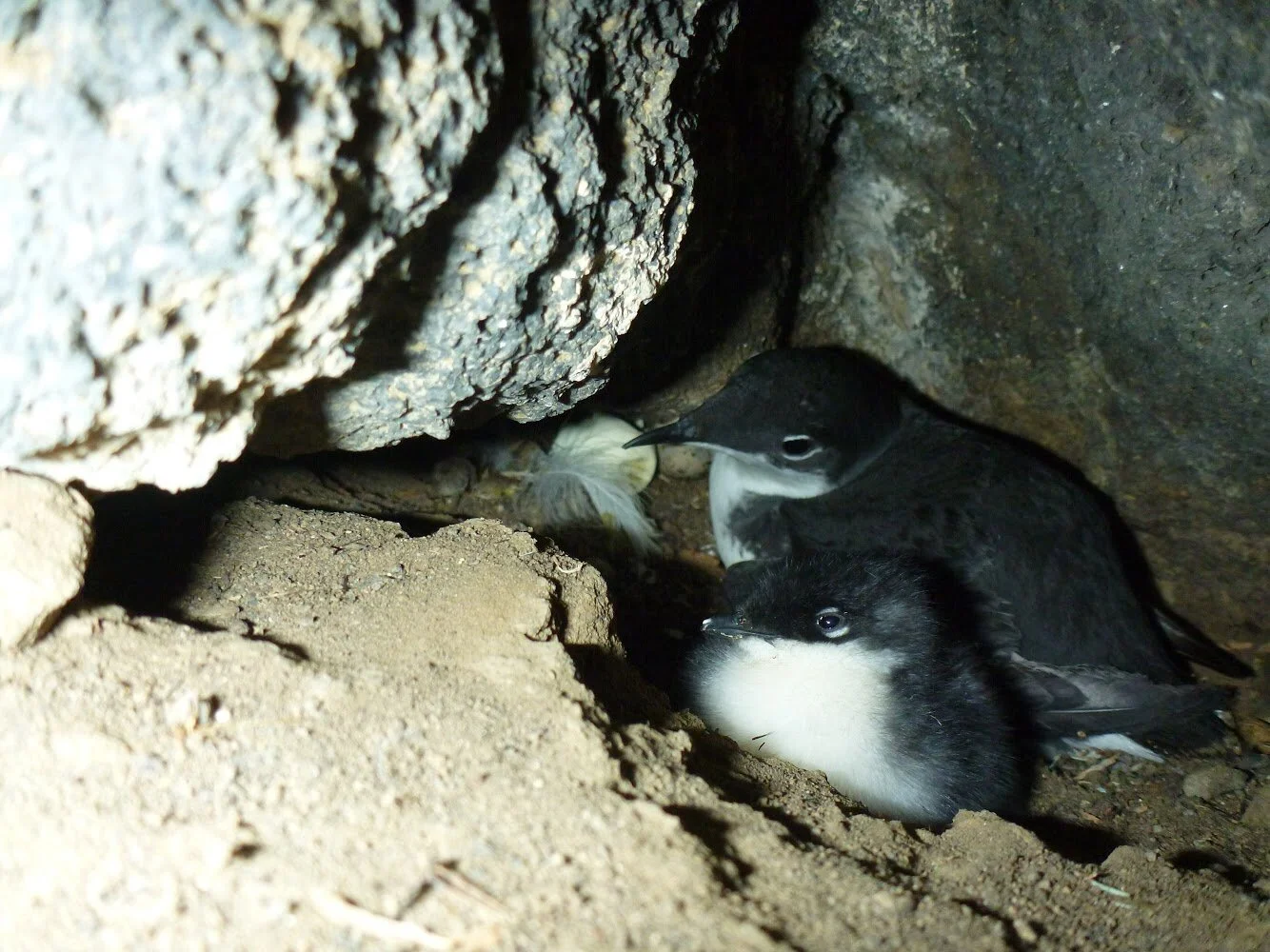
Amelia J. DuVall spent the last several years getting pooped on while studying seabirds at Channel Islands National Park in southern California. Now a graduate student at the School of Aquatic and Fishery Sciences at the University of Washington, her research is on seabird ecology, conservation, and management across the Pacific Ocean, from the Channel Islands to French Polynesia.
Read More
Molly Zych studies cell division in order to understand how human cells accurately separate DNA into two new daughter cells. Using microscopy and cell biology tools Molly hopes to understand why errors occur in this process and how they contribute to both developmental disorders and cancer advancement.
Read More
Natalie Mastick is a Ph.D. student in Aquatic Sciences at UW and a Graduate Fellow with Oceans Initiative, and she studies how parasites affect marine mammals in Puget Sound. She uses historical ecology to figure out how parasite abundances in fish have changed over the course of the past century, and works to determine how parasitized the whales that eat those fish species are today using recently collected fecal samples.
Read More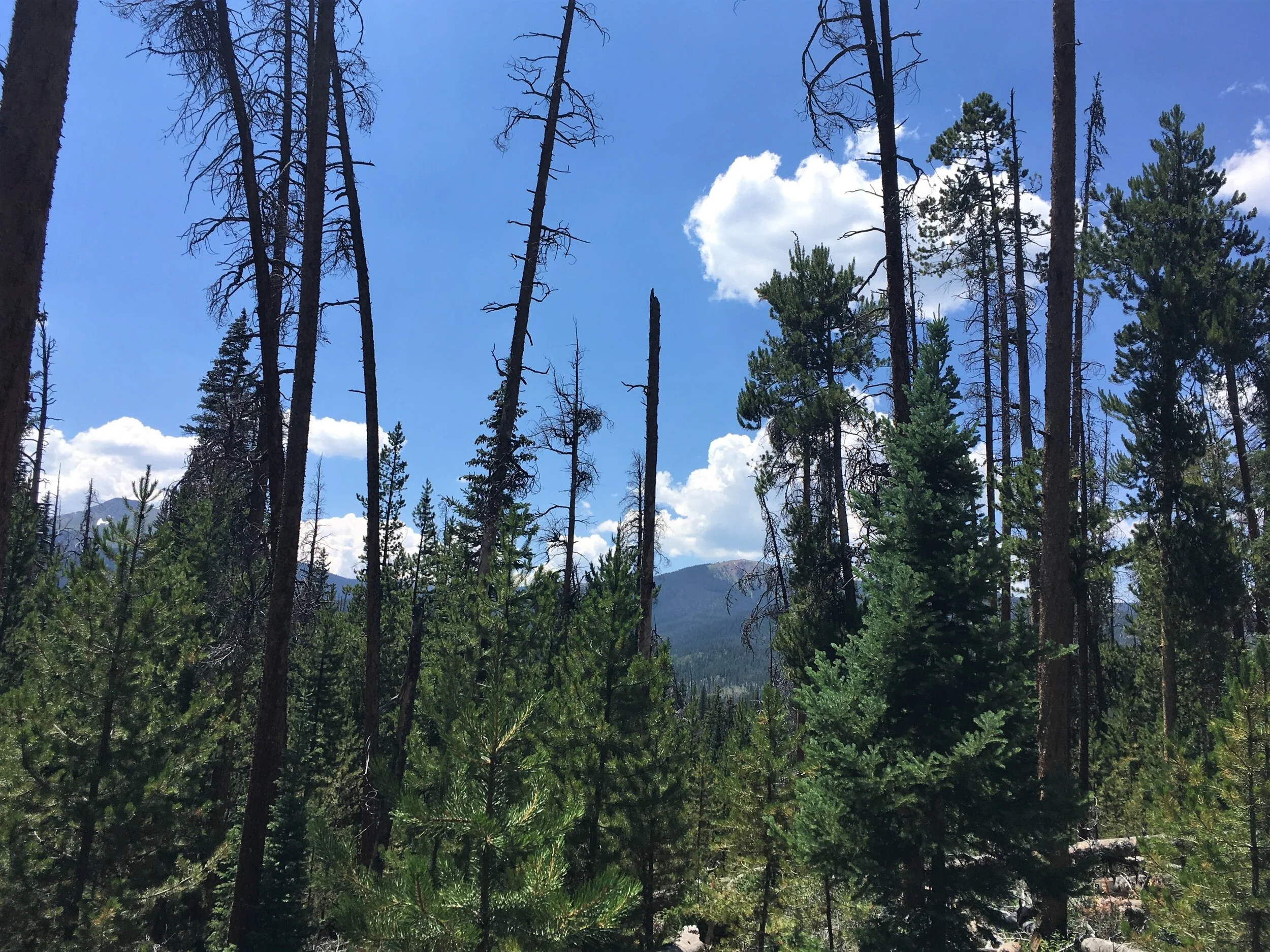
Jenna Morris is an ecologist studying the ways forests respond to disturbances like fire and insect outbreaks. Her current research explores how management activities and bark beetle outbreaks interact to shape forests across western North America, with implications for improving our ability to maintain resilient forest structure and function in a changing climate.
Read More
Sara Keller is a fourth-year PhD student in Bioengineering working in the lab of Dr. Mike Averkiou. She studies the use of contrast-enhanced ultrasound for cancer diagnostics and therapy.
Read More
Meghan Garrett is a PhD student in the Molecular and Cellular Biology program at UW. She studies the immune response against HIV in infected mothers in order to better understand antibodies that might have protected their infants from infection, with the goal of using this knowledge to improve HIV vaccine design.
Read More
NIck Weber is a PhD candidate in the Department of Atmospheric Sciences. His research focus is long-term weather prediction, and how we might be able to improve forecasts with next-generation, high resolution global models.
Read More
Laura Carlucci is a grad student in the Department of Bioengineering at the University of Washington. She is studying how mechanical forces affect binding between molecules and the mechanism behind a particularly force-resistant interaction found in nature.
Read More
Jiwoon Park is a PhD student in chemical oceanography. She studies organic molecules that are produced by marine microbes to efficiently take up metals (e.g. iron, cobalt) for growth, to understand how the production or consumption of organic molecules may affect metal availability and eventually the microbial population in the North Pacific Ocean.
Read More
Andrew Shumway is an astrobiologist and planetary scientist who is fascinated by the role of water on Mars. His experiments simulate the cold, dry conditions of Mars’ surface to study how water forms in extreme environments.
Read More
Anne Polyakov is a graduate student at the University of Washington and she studies how plants communicate using vast, underground fungal networks, through which they share nutrients and warning neighbors of incoming danger within the network. Anne studies the costs and benefits of participating in this network, and what we can learn from plant communities by listening to what they are saying in the wood wide web.
Read More![“Why are we learning this? Because... [Mardi Gras Edition]”](https://images.squarespace-cdn.com/content/v1/5c78295390f90412fe853237/1582411969642-DQ06X2BG27A93V1KMVXY/Picture1.jpg)
A.J. Balatico is a Ph.D. student in Learning Sciences and Human Development in the University of Washington’s College of Education with interests in computational neuroscience and educational equity, especially for science, technology, engineering, and math education. He focuses on how people learn motivation and identities from their experiences.
Read More
Andrea Joseph is a Chemical Engineering graduate student at the University of Washington. She studies the brain’s natural defense systems and how they go awry in disease. These changes are important to consider when designing new treatments that target the brain.
Read More
Taryn Black is a geoscientist studying glacier changes in Greenland. She uses satellite images to monitor seasonal and yearly variations in glacier size and to determine how they are responding to climate change.
Read More
Virginia Littell is a second year Masters student in the Earth and Space Sciences Department at the University of Washington. She is a geologist who studies the ancient climate of Southern Asia by analyzing the chemical signatures of soils and fossils.
Read More
Samantha Phan is a Chemistry graduate student at the University of Washington. Her research focuses on developing efficient and environmentally friendly chemical techniques for semiconducting materials used in organic carbon-based electronic devices, such as OLEDs, solar cells, and wearable electronics. The purpose of her project is to reduce the materials’ economic costs and chemical complexity, making them more suitable for large-scale commercial production and lower the cost of future electronic devices.
Read More
Mengying is a graduate student at UW studying molecular engineering. She studies fluorescent nanoparticles called quantum dots and their behaviors in the developing brain. Her work also focuses on using the knowledge gained above to better design imaging and tracking system of viruses or other biological entity in the brain.
Read More